If anyone had told me that my favourite restaurant in the world was in Estonia, I probably would have laughed. Not because Estonia doesn’t have great food, but because it’s just not a place that comes to mind when you think of food overall.
But Estonia has the last laugh, because despite not being known for it, they do in fact happen to have one of the most extraordinary culinary experiences in the world (and my personal favourite so far)
If you’re visiting Tallinn, I think the number one must-do food experience is a trip Olde Hansa.

By the time I crash-landed in Tallinn after three busy days at a conference in Tartu, all I wanted to do was take a shower and get to bed.
But it was our last night in Estonia, and my husband gave me the look… and the speech.
“This is our one chance, Ren. We’re here. And who knows if we’ll ever get an opportunity like this again.”
My eyes were burning. My body was tired. But deep down, I knew if I didn’t push, this might be something I’d regret forever.
So I quickly brushed my hair, fixed my mascara, put on my shoes, and jumped out of my room before I could talk myself out of it.
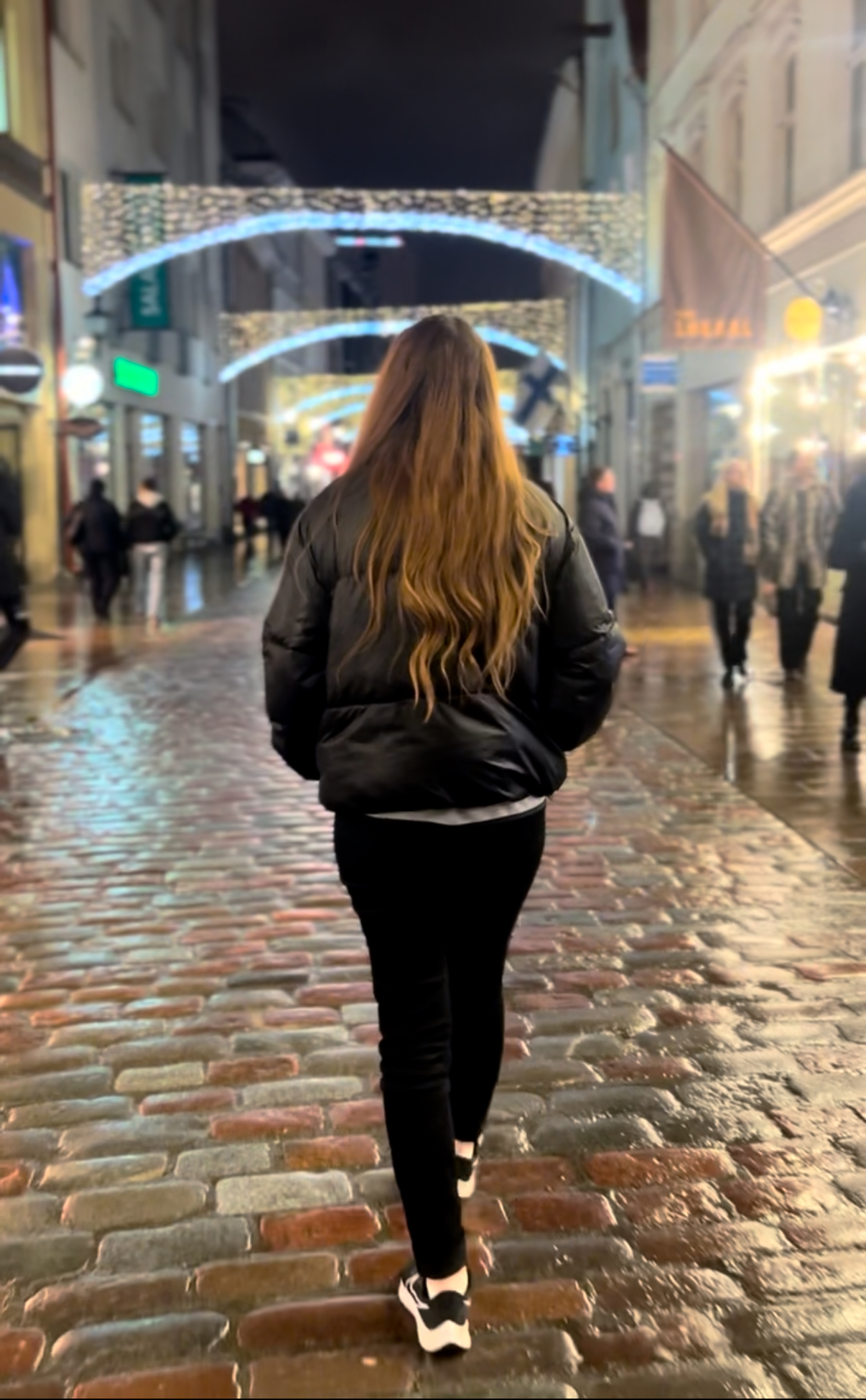
We were dropped off a few minutes away from the restaurant so we could walk through Old Talliin for a bit, which was still decked out in pretty Christmas lights. You could sense the history of the city all around you, with influences from Europe, Finland, and the Soviet era.
Olde Hansa is located right in the heart of Old Tallinn. In the Middle Ages, the building belonged to a rich German merchant. Back then, Tallinn was part of the Hanseatic League, one of the most powerful trading networks in Northern Europe. Ships carrying spices, salt, textiles, and grain moved between cities like Lübeck, Bruges, and Novgorod, and Tallinn was one of the key ports linking East and West. Saffron, which appears on the menu at Olde Hansa today, would have been worth nearly its weight in gold.
When you walk through the doors, all of your senses are immediately engaged. Your eyes start to adjust to the soft light of candles that sit on every table and in the iron chandeliers that hang from the thick, wooden beam ceiling. There’s no electricity, just like it would have been in the 1400s.
We were quickly approached by a host, dressed in full medieval costume.
“Table for two, my lady?”
The servers tend to you in full character, never winking once to remind you that it’s all pretend, and the little boy or girl inside of you will love every second of it.
My husband ordered the bear main course, which even writing now still feels wild to say out loud.
“A meal fit for the King!” shouted our server
We learned that bear was indeed an Estonian nobles’ favourite dish.
I opted for the grilled salmon, staying close to my food comfort zone.

Both dishes were delicious, and everything was prepared and cooked exactly as it would have been hundreds of years ago. You taste the process as much as the flavours..
As we were midway through our meal, a small band emerged from the corner of the room, including our own waitress, who was now holding a flute. Another waitress carried what looked like a lyre, and there were other medieval-style instruments.
They moved from table to table, playing for each group of guests individually, without rushing, offering us all a moment of entertainment that made it feel more and more like we had actually time-travelled.

As they came to our table and I sat there listening and admiring their talent, I found myself thinking about how many people had gathered in that room across centuries, sharing meals, celebrating milestones. They gave me something I didn’t even know I was craving, which was the chance to feel, even briefly, what life might have been like hundreds of years ago. To sit at a long wooden table with someone you love, to eat slowly, to listen to live music with no speakers or wires; just hands and breath and wood.
My eyes filled with water and I felt deeply grateful to be there.
I was so exhausted just a few hours earlier. My eyes were burning from three full days at a conference. But sitting there, in the dim light, surrounded by families and music, I felt so alive.
And maybe that’s what made it unforgettable. Not just the food, or the candlelight, or the music, but the decision to go at all. If I had chosen comfort over curiosity that night, if I had stayed in my hotel room and convinced myself I was too tired, I would have missed something that now feels like one of the most extraordinary experiences of my life.
Olde Hansa is so much more than a great spot to have dinner. It is immersion and an opportunity to learn about history in a way that you can taste, hear, and sit inside of.
Before you go
If you’re planning to visit Olde Hansa, a little preparation goes a long way.
The menu isn’t extensive, and that is part of its charm. This isn’t the kind of place with endless substitutions or modern twists. The dishes are rooted in medieval recipes, which means the ingredients are specific and intentional. It’s worth looking ahead at the menu, so you know what to expect, especially if you’re travelling with children or someone who prefers more familiar flavours.
Speaking of children, kids were dining when we visited. The atmosphere is immersive and slower paced, so it works beautifully for children who are curious and able to sit and take it in. If your little ones enjoy storytelling and a bit of theatre, they might love it. If they need quick meals and constant stimulation, this may not be the right night for it.
I highly recommend you make a reservation. Even in January, which is one of my favourite times to travel because crowds are lighter and reservations are easier to land, the restaurant was busy. Call ahead to make sure you’re not left disappointed, especially if you want an evening seating when the candlelight feels most magical.
In terms of price, expect to spend more than you would at a casual restaurant in Tallinn. Main courses typically range from approximately 25 to 45 euros, depending on what you order, with specialty game meats on the higher end. For the full experience, including drinks, you should plan accordingly. It’s not inexpensive, but for what you get, it feels entirely justified.
There is also a small shop tucked toward the back where you can purchase medieval-inspired souvenirs, spices, and gifts. A short stop before you leave will feel like an extension of the experience, especially if you want to bring home a small reminder of the evening.
Most importantly, don’t come here in a rush. This is not a quick dinner before your next activity. This is the activity. Plan to spend time, let your evening unfold slowly and go at night if you can, so that you can step back out into Old Town afterward and wander the cobblestone streets. In winter, especially in January, the air is crisp, the crowds are thinner, and the entire city feels like it is exhaling.
It will be a night you’ll never forget.





Leave a Reply